



















To Issue 186
Citation: Littringer E, Starlinger R, “Scaling Radioligand Therapy: Why Packaging and Delivery Systems Must Evolve”, ONdrugDelivery, Issue 186 (May 2026), pp 56–62.
Dr Eva Littringer and Dr Roland Starlinger discuss the exciting new frontier of radioligand therapy and the imminent bottleneck presented by current delivery methods running into strict limits on handling radioactive materials. They go on to introduce the Oncofuse prefilled-syringe-based system as a novel approach to containment and handling of these therapies, enabling radioligand therapy to expand beyond niche specialist clinics and hospitals.
Radioligand therapy (RLT) is progressing rapidly from specialised nuclear medicine departments into broader oncology practice. The clinical success of lutetium-based therapies, regulatory momentum and a rapidly expanding development pipeline have transformed RLT from a niche modality into a major area of pharmaceutical investment and development. As RLT programmes advance, the question shifts from “Can we treat?” to “Can we deliver reliably, safely and at scale?”
“THESE RADIOACTIVITY-DRIVEN CONSTRAINTS AMPLIFY THE NEED FOR DELIVERY SYSTEMS THAT REDUCE EXPOSURE, MINIMISE MANIPULATIONS AND SUPPORT HIGHLY CO-ORDINATED WORKFLOWS.”
This shift reveals a central challenge: the delivery infrastructure for RLT is not scaling at the pace of its clinical and commercial expansion. This is partly because RLT products are inherently radioactive, introducing handling and workflow demands that traditional pharmaceutical operations are not accustomed to managing, such as decay-driven time pressure, limited shelf life and stringent shielding requirements that complicate preparation, transport and administration. These radioactivity-driven constraints amplify the need for delivery systems that reduce exposure, minimise manipulations and support highly co-ordinated workflows.
Today, most therapeutic radiopharmaceuticals still arrive in shielded vials – a legacy of diagnostic practice that functions well in expert hands but becomes increasingly strained as the demand for treatments rises across broader oncology networks. By contrast, transitioning to prefilled syringes (PFSs), paired with integrated protective packaging, reduces handling steps, improves consistency and supports tighter end-to-end lifecycle control from transport through to waste. The move towards PFSs is already underway – official administration materials for PLUVICTO® (lutetium-177 vipivotide tetraxetan (177Lu-PSMA-617), Novartis) explicitly describe both vial- and PFS-based administration, signalling a shift towards formats that support scalable, standardised delivery.
Packaging and delivery systems – traditionally an afterthought in radiopharmaceutical development – have therefore become essential enablers for sustainable growth. Oncofuse was specifically designed to fill this gap as an integrated packaging and handling system that reduces manipulations, maintains continuous shielding and supports transport, preparation, administration and disposal in one consistent workflow.
RLT TODAY: A RAPIDLY EXPANDING FIELD
The growth trajectory of RLT is steep and accelerating. According to TheranosticTrials.org, there are more than 200 active trials underway globally across numerous isotopes and cancer types, with 38 companies participating, from pharmaceutical leaders to emerging biotechs (Figure 1). Approvals, such as for 177Lu-PSMA-617, have demonstrated significant improvements in overall and progression-free survival, helping to establish RLT as one of the most promising targeted therapeutic modalities of the past decade.1

Figure 1: RLT is experiencing rapid global expansion, with more than 200 active clinical treatment trials across diverse isotopes and cancer types, and participation from 38 companies ranging from major pharmaceutical organisations to emerging biotechs (only actively recruiting trials, only treatment trials; data from clinicaltrials.gov, accessed Apr 2026).
Commercial data underscore this momentum – according to Medi-Tech Insights (Brussels, Belgium), current forecasts project the RLT market to exceed US$13 billion (£9.6 billion) by 2030, with a compound annual growth rate (CAGR) of more than 30% (Figure 2). In parallel, nuclear medicine societies highlight rapidly widening implementation gaps between eligible patients and those who are actually treated. The trajectory is clear: RLT demand is rising faster than health systems can operationally absorb it.

Figure 2: RLTs are demonstrating a strong upward market trajectory, reflected in current forecasts projecting global RLT sales to reach approximately $13 billion by 2030 (based on publicly reported data from Novartis and Medi-Tech Insights).
What Are RLTs?
RLTs pair a tumour‑targeting ligand, such as small molecules, peptides or antibodies, with a radioactive isotope. After intravenous administration, the ligand selectively accumulates at tumour sites and delivers highly localised ionising radiation, most commonly β‑particles (e.g. lutetium‑177) or α‑particles (e.g. actinium‑225) to malignant cells and their surrounding microenvironment.
A closely related diagnostic form of the same or a closely related ligand can be labelled with a γ‑ or positron‑emitting radionuclide, enabling high‑sensitivity single-photon emission computed tomography (SPECT) or positron emission tomography (PET) imaging prior to therapy. This allows clinicians to visualise target expression, assess whole‑body tumour burden and confirm patient suitability before administering therapy. In certain theranostic applications, radionuclides such as lutetium-177 additionally permit SPECT imaging using the therapeutic radiopharmaceutical itself, owing to their concurrent β‑ and γ‑emissions. In selected settings this also allows the assessment of tumour burden and its changes during the course of treatment. Together, these paired diagnostic and therapeutic agents form the basis of theranostics – a unified modality that integrates patient selection, molecular imaging and targeted radiotherapy within one molecular platform (Figure 3).

Figure 3: Schematic representation of radioligand therapy agents, illustrating their components and mechanism of action. Reproduced from Ninatti et al (2025).2
“WITH THE NUMBER OF CLINICAL PROGRAMMES INCREASING AND MORE ISOTOPES ENTERING THE PIPELINE, OPERATIONAL READINESS – NOT SCIENTIFIC POTENTIAL – IS LIKELY TO DETERMINE HOW QUICKLY PATIENTS WILL GAIN ACCESS TO RLT.”
Lutetium-177-based radioligands are now established in the treatment of neuroendocrine tumours and prostate cancer, and developers are actively exploring new isotopes, targets and indications. With the number of clinical programmes increasing and more isotopes entering the pipeline, operational readiness – not scientific potential – is likely to determine how quickly patients will gain access to RLTs.
A NEW CHALLENGE FOR PHARMACEUTICAL DEVELOPMENT AND COMMERCIALISATION
Beyond the clinical promise, RLT introduces a practical novelty for many pharmaceutical organisations: routine interaction with radioactive material across development, manufacturing, distribution and post-use management. Historically, many pharma companies have built operating models around non-radioactive products, with radiation expertise concentrated in small pockets of specialists or external partners.
Therapeutic radioligands require pharma companies to integrate radiation considerations into mainstream development and supply activities: time-critical logistics driven by radionuclide half-life, specialised packaging and shielding, and handling constraints that influence everything from process design to site operations. This affects interfaces across functions that are not always accustomed to radioactivity, such as analytics, stability, quality assurance, external manufacturing and distribution planning. In this context, packaging and delivery systems become part of the “technology stack” required to make an RLT programme viable at scale, not an accessory added near launch.
Oncofuse helps to operationalise these cross-functional challenges by standardising physical interfaces and reducing the number of exposure-relevant manipulations, supporting more predictable processes from manufacturing to the clinic.
The Unique Handling Challenges of RLT
RLT shares many of the requirements of conventional sterile injectables, including sterility, container integrity and accurate dosing, but also adds a persistent risk dimension due to ionising radiation. Actions that are routine for traditional injectables become exposure-relevant for radiopharmaceuticals. Three factors dominate real-world workflows:
- Occupational exposure limits
- Time pressure from short shelf life
- Mandatory radioactive waste management.
Each additional handling step increases exposure and constrains throughput. Oncofuse reduces these steps by providing a single, shielded containment system that remains consistent across receiving, preparation, administration and disposal.
RLT delivery also spans multiple professional domains – radiopharmacy, radiation protection, nuclear medicine and oncology – making standardised physical interfaces enormously valuable. By unifying these interfaces, Oncofuse reduces ambiguity, training burden and site-to-site variation.
Scalability and the Emerging Exposure Capacity Gap
Despite the complex administration set-up (Figure 4), RLT works well because it is delivered to relatively few patients in highly specialised nuclear medicine departments, where staff are trained and equipped to handle radioactive materials safely. In this controlled environment, workflows are efficient and radiation exposure is managed effectively. Based on data published by the Lancet Oncology Commission, the number of prostate cancer patients currently treated with 177Lu-PSMA-617 is around 22,000 patients globally, whereas the number of eligible patients is around 158,000.4

Figure 4: Set‑up used during PRRT‑Lu administration. (a) Lutathera vial positioned outside the lead pot and placed within a polymethyl methacrylate (PMMA) shielding cylinder, with infusion needles inserted for controlled transfer. (b) Workflow positions of clinical staff and the patient during final air infusion, highlighting the operational complexity and radiation‑protection requirements of current delivery systems. Reproduced from Riveira‑Martin et al (2023).3
However, as the number of eligible patients increases, these specialised centres are approaching a capacity limit. The bottleneck is not the efficacy of the treatment but the dose restrictions that staff must adhere to, as occupational radiation exposure is cumulative. This creates a finite ceiling on how many procedures can be performed, regardless of patient need. A recent evaluation of radiation exposure during lutetium-177 therapy demonstrated that, even with proper shielding and adherence to safety protocols, theoretical annual dose limits for the most exposed staff members correspond to only 15–49 patients per year, depending on the dose metric used.3
The unmet needs of radiopharmaceutical therapies were addressed at the ASTRO Radiopharmaceutical Symposium 2026, where the need for increased collaboration between nuclear medicine and radiation oncology (including sharing revenue and resources) was identified.5 Ultimately, this means that it will be necessary to extend the administration of radioligand therapies out of the specialised nuclear medicine departments to other departments, such as radiation oncology.
The situation becomes even more challenging when the growing demand requires RLT to be delivered in less specialised hospitals. These settings may not routinely work with radioactive materials, meaning that staff will require additional training, oversight and infrastructure. This not only slows adoption but also increases the risk that cumulative exposure limits are reached sooner, further constraining throughput.
In short, while RLT is clinically effective, scaling it beyond expert centres will be limited by staff exposure constraints and the readiness of non-specialised sites, making exposure-reducing workflow and system innovations essential for sustainable growth. Oncofuse is designed to help reduce exposure‑relevant steps and support more scalable workflows by reducing manipulation steps, maintaining shielding throughout the workflow and limiting staff proximity and time to unshielded radioactive components.
THE CASE FOR PFSs IN RLT
“BY SHIFTING COMPLEXITY UPSTREAM INTO CONTROLLED MANUFACTURING AND FILL-FINISH ENVIRONMENTS, PFSs CAN SUPPORT A SAFER AND MORE REPEATABLE POINT-OF-CARE WORKFLOW.”
Prefilled syringes are a mature packaging format in many injectable markets because they can reduce preparation steps, support dose accuracy and improve workflow consistency. In RLT, those same advantages translate directly into exposure reduction and scalability. A PFS-based presentation can remove or minimise the manual dose-withdrawal step and reduce the number of manipulations performed close to the radioactive source. It can also reduce site-to-site variability by offering a more standardised delivery unit. By shifting complexity upstream into controlled manufacturing and fill-finish environments, PFSs can support a safer and more repeatable point-of-care workflow.
From a system perspective, PFSs also enable more consistent integration of safety features, such as compatible shielding and standardised interfaces, and can reduce reliance on site-specific workarounds. The transition from vials to PFSs is therefore not merely a convenience improvement – it is a structural change that helps decouple patient throughput from manual handling intensity and the cumulative exposure experienced by specialised staff.
Beyond the Syringe: Integrated Packaging for Transport, Administration and Disposal
For RLTs, the primary container is only one element of the system. The therapy must be transported, stored, administered and disposed of under radiation constraints. Consequently, scalable solutions must consider packaging as an integrated part of the product lifecycle. A robust concept should:
- Provide shielding during transport and storage
- Enable administration with minimal manipulation
- Transition seamlessly into waste handling after use.
Maintaining containment and shielding throughout the product lifecycle reduces exposure opportunities, simplifies procedures and supports more consistent implementation across sites.
Designing Waste Management into the System
Radioactive waste is a built-in feature of RLTs. Minimising the number of contaminated components and the need for post-administration handling can reduce exposure and operational burden. Single-dose formats with a low residual volume and packaging designed for direct, controlled disposal can simplify decay storage and reduce repeat handling. Importantly, waste handling is part of the total exposure picture. If packaging can reduce manipulations not only during administration but also post-use sorting, transfer and storage, the cumulative benefit can be meaningful, especially at higher patient throughputs.
Oncofuse: An Integrated PFS Packaging Concept
Oncofuse addresses these challenges by building on the established advantages of PFSs and integrating them into a single, shielded containment platform that remains intact from arrival to decay storage. By maintaining a continuous protective barrier, Oncofuse reduces the opportunities for exposure, ensures consistent handling across sites and eliminates unnecessary repackaging or component transfers. Its single‑dose, low‑residual‑volume configuration further minimises contaminated waste and simplifies the transition into decay storage, reducing post‑treatment sorting and limiting cumulative exposure as treatment volumes grow.
This concept is noteworthy because it treats packaging, shielding and end-of-life handling as one coherent system rather than separate add-ons. If shielding and containment remain with the product through transport, administration and disposal, the number of times staff must directly handle radioactive components can be reduced, addressing a core scalability constraint (Figure 5).

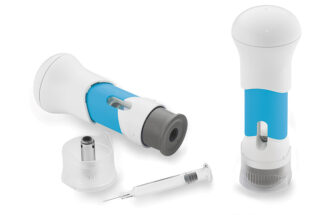
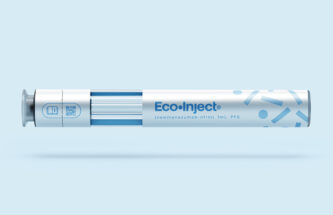
Figure 5: The Oncofuse system enables safer, simplified radioligand handling through a unified, shielded packaging and delivery approach.
OPPORTUNITIES FOR PHARMACEUTICAL DEVELOPMENT PROGRAMMES AND SUPPLY CHAINS
Integrated packaging can offer value well before commercial launch. In development, radioactive samples require repeated handling and storage. Shielded, system-level packaging concepts can support safer storage and enable routine tasks, such as removing stability pulls or preparing samples for testing, with fewer exposure-relevant steps.
This is more than a laboratory convenience. As RLT portfolios grow, development organisations may need to run multiple stability programmes in parallel and handle increasing numbers of samples and analytical timepoints. Reducing the exposure relevance of routine actions supports more sustainable ways of working and can make it easier to integrate RLT activities into broader development organisations, rather than confining them to a small number of specialists with limited time that people can work in the lab with radioactive materials.
“ONCOFUSE FRAMES ITS CONCEPT AS AN END-TO-END PACKAGING SYSTEM FOR TRANSPORT, ADMINISTRATION AND WASTE MANAGEMENT INTENDED TO SIMPLIFY WORKFLOWS AND SUPPORT SCALABILITY.”
Across clinical supply chains, system-level packaging may support more robust transport and receiving workflows and reduce the need for site-specific adaptations. Oncofuse frames its concept as an end-to-end packaging system for transport, administration and waste management intended to simplify workflows and support scalability. In addition, with new guidance from the US FDA on dose-finding studies, the Oncofuse system further provides freedom in dose adaption by enabling easy adjustment of volumes.
More generally, integrated concepts can strengthen time-critical supply reliability by reducing repackaging steps, standardising interfaces and helping clinical teams to focus on administration rather than packaging manipulation. This becomes increasingly relevant if RLTs expand beyond a small number of specialised hospitals and into broader networks where consistency and simplicity are essential.
CONCLUSION AND OUTLOOK
RLTs are quickly moving from a specialist-use-only application into the broader oncology landscape. In that transition, packaging and the associated delivery workflow become strategic enablers rather than downstream details. Many RLT products still follow a vial-based paradigm inherited from diagnostic radiopharmaceutical practice. That legacy approach can be workable in a niche setting, but it becomes increasingly misaligned as patient numbers rise, treatment moves beyond centres of excellence and organisations attempt to industrialise and standardise delivery across multiple sites.
A shift from vials towards PFS-based presentations, paired with integrated protective packaging, offers a pathway to reduce handling steps, improve workflow consistency, lower occupational exposure and strengthen end-to-end lifecycle management across transport, administration and radioactive waste handling. Oncofuse builds directly on this trajectory. By unifying transport shielding, administration support and waste-ready containment into one continuous system, it illustrates how next-generation packaging can remove exposure-relevant steps, simplify workflows and help bridge the scalability gap that RLT now faces.
REFERENCES
- Ahmed B, Ravi P, “Current and future perspectives on radioligand therapy in advanced prostate cancer”. Ther Adv Med Oncol, 2026, Vol 18, art 17588359251409047.
- Ninatti G, Lee ST, Scott AM, “Radioligand Therapy in Cancer Management: A Global Perspective”. Cancers (Basel), 2025, Vol 17(21), art 3412.
- Riveira-Martin M et al, “Radiation exposure assessment of nuclear medicine staff administering [177Lu]Lu-DOTA TATE with active and passive dosimetry”. EJNMMI Phys, 2023, Vol 10(1), art 70.
- Abdel-Wahab M et al, “Radiotherapy and theranostics: a Lancet Oncology Commission”. Lancet Oncol, 2024, Vol 25(11), pp e545–e580.
- Patel R, “ASTRO Radiopharmaceutical Symposium 2026: Addressing Unmet Needs in Radiopharmaceutical Therapy”. Presentation at ASTRO Radiopharmaceutical Symposium, Feb 2026.