INJECTION
DUAL CHAMBER
FORMULATION
PFS
WEARABLES
ALL INJECTION
OCULAR
ORAL
RESPIRATORY
PULMONARY
NASAL
ALL RESPIRATORY
SKIN
SUSTAINABILITY
MORE
INTERVIEWS
EXPERT VIEWS
EARLY INSIGHTS
COMPANY LISTINGS
OUR AUTHORS
THE MAGAZINE
EVENTS
ED CALENDAR
MEDIA PACK
CONTRIBUTE
Subscribe
INJECTION
DUAL CHAMBER
FORMULATION
PFS
WEARABLES
ALL INJECTION
OCULAR
ORAL
RESPIRATORY
PULMONARY
NASAL
ALL RESPIRATORY
SKIN
SUSTAINABILITY
MORE
INTERVIEWS
EXPERT VIEWS
EARLY INSIGHTS
COMPANY LISTINGS
OUR AUTHORS
THE MAGAZINE
EVENTS
ED CALENDAR
MEDIA PACK
CONTRIBUTE
SEARCH
SEARCH
advanced search
INDUSTRIALISATION
PREFILLED SYRINGES
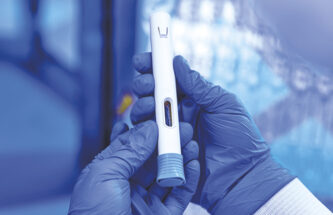
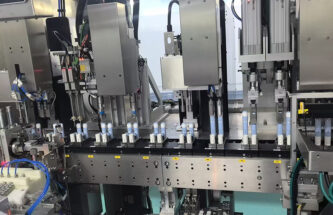
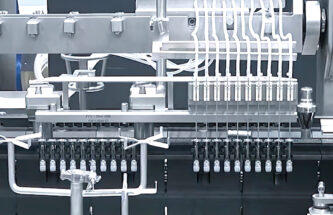
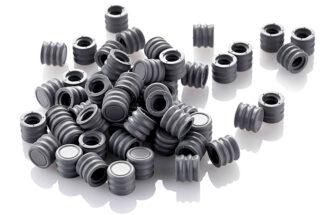
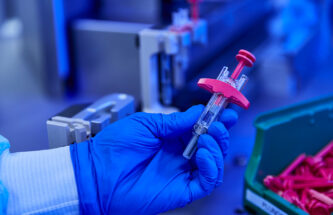
Building a Biopharmaceutical-Grade PFS: From Glass Tubing to Finished Container
Charlotte Leconte-Ostrowski and Christoph Grinda present ENOVIA™, a quality level designed to enhance understanding and achievement of high quality device design for combination products, biologics and biosimilars.
INDUSTRIALISATION
THE COMMERCIAL CASE FOR SPRAY-DRYING FOR MODERN DRUG PIPELINES
Catalent's Itay Speicher highlights how current conditions in the pharmaceutical pipeline, especially the high proportion of poorly soluble drugs in early-stage development and rise in amorphous solid dispersions, along with the cost-efficiency and flexibility of spray-drying, are providing the optimal conditions to maximise the value of spray-drying in drug development and commercial scale-up.
PREFILLED SYRINGES
Darren Hieber
Ensera
THE PLATFORM ADOPTION GAP: WHY DEVICE SELECTION IS ONLY THE BEGINNING OF COMBINATION PRODUCT DEVELOPMENT
Darren Hieber investigates the often overlooked gap between selecting an injection device platform for a drug development programme and having a finalised combination product ready for commercialisation, digging into the various activities required to bridge the gap.
INDUSTRIALISATION
Ingmar Kneer
GAPLAST
IMPLANTABLE DRUG DELIVERY SYSTEMS: BUILDING A ROBUST SUPPLY CHAIN FROM POLYMER EXTRUDATE TO COMMERCIAL PRODUCT
Ingmar Kneer discusses the broader considerations of commercialising an implantable drug delivery system beyond the implant itself, considering factors such as manufacturing, automation, regulatory concerns, traceability and the accompanying delivery system.
EXPERT VIEW
Jordan Xu
FROM FRAGMENTED PROCUREMENT TO INTEGRATED ASSEMBLY: HOW THE INJECTABLE DEVICE INDUSTRY IS RETHINKING EQUIPMENT STRATEGY
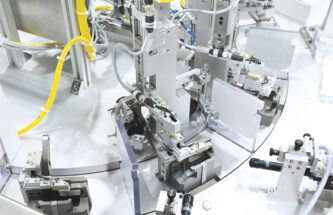
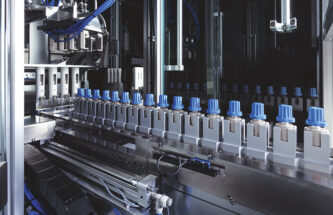
Jordan Xu examines the shift from fragmented procurement to integrated, turnkey assembly solutions, exploring the deep technical and regulatory drivers behind this evolution as the industry increasingly recognises that the real differentiator is not the speed of individual machines but the seamless integration of the entire assembly process.
SHOWCASE
Chelsea Keeton
Grand River Aseptic Manufacturing
Company Showcase: Grand River Aseptic Manufacturing
Grand River Aseptic Manufacturing discusses its sterile filling capabilities and how its expanding facilities support growing demand for vial, syringe and cartridge filling.
INTERVIEW
Patrick Jeukenne
BD (Becton Dickinson & Company)
Interview: Contamination Control in Practice: BD’s Global, Risk-Based Approach to Supporting Sterile Drug Manufacturing
BD's Patrick Jeukenne and Frédérique Pedretti-Abel explain how the company is putting contamination control into practice through global strategy, concrete investments and measurable actions. This approach is designed to support pharmaceutical manufacturers’ compliance and operational performance, while ultimately contributing to the quality and safety of medicines delivered to patients.
SHOWCASE
Lifecore Injectables
MASTERING PRODUCT TRANSFER FOR A RANGE OF INJECTABLES
Lifecore Injectables explores product transfer, the often overlooked step between formulation and filling, and looks at how transfer technologies, mixing and recirculation strategies can be matched to the demands of water-like solutions, highly viscous products and fast-settling suspensions to maintain product quality throughout manufacturing.
INDUSTRIALISATION
Dr Carsten Köhler
BBS Automation
ASSEMBLY CONCEPTS FOR WEARABLE INJECTORS BASED ON ROI
Dr Carsten Köhler looks at how assembly concepts drive the return on investment in the wearable injectors market and the effect of automation on these metrics.
EARLY INSIGHT
Dr Simon Rufer
CoFlo Medical
HIGH-CONCENTRATION, HIGH-VISCOSITY DELIVERY WITH CORE-ANNULAR FLOW
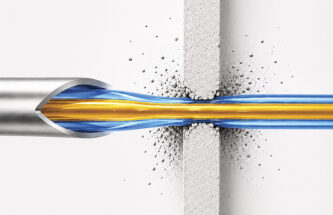
Dr Simon Rufer and Pratik Mishra introduce CoFlo Medical ’s core-annular flow platform, which promises to eliminate the long-standing viscosity bottleneck for needle-based delivery. The company’s platform enables high-concentration, high-viscosity delivery for existing formulations without the need for reformulation or new compounds in a patient-friendly form.
WEARABLES
Dr Oliver Eden
TxSphere
SCALING ON-BODY DELIVERY FOR LARGE-VOLUME THERAPIES
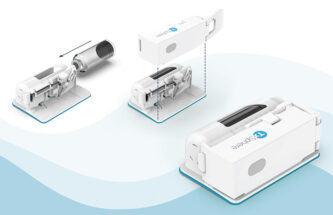
Mike Stout and Dr Oliver Eden examine the shift towards large-volume SC administration, what on-body delivery systems make possible and why bringing them to market at scale depends as much on manufacturing as on design.
EXPERT VIEW
Andy Wertheim
INDUSTRIAL ARCHITECTURE: THE NEXT COMPETITIVE ADVANTAGE IN WEARABLE INJECTORS
Andy Wertheim puts forward the case that wearable drug delivery devices comprise two separate architectures – therapeutic and industrial – that must be developed and implemented in tandem if a development programme is to achieve long-term commercial success.
INDUSTRIALISATION
Fabio Weingärtner
Herrmann Ultraschall
Ultrasonic Joining Process Ensures Reliable Assembly of Sensitive CGM Components
Fabio Weingärtner discusses the value of ultrasonic welding for wearable diagnostic and drug delivery devices, using a continuous glucose monitor developed by GlucoModicum as a case study, describing the joining challenges for distinct, delicate components and the innovative solutions produced to overcome complex design requirements.
EXPERT VIEW
John Ward
THE HIDDEN RISKS IN DRUG-DEVICE DELIVERY: WHY THE FINAL STAGE DEFINES LAUNCH SUCCESS
John Ward and Paul Hamill explore the structural and operational risks embedded in late-stage drug-device delivery, why these risks are intensifying and how the industry is beginning to rethink its approach to downstream execution.
INDUSTRIALISATION
Christy Chen
SHL Advantec
INNOVATION AND AUTOMATION REUNITED – ENABLING SCALABLE FINAL ASSEMBLY FOR CARTRIDGE-BASED AUTOINJECTORS
Using SHL Medical's Reunite™ dual-chamber autoinjector and SHL Advantec's AOU™ assembly machine platform as a case study, Christy Chen and Alberto Flores explore the critical synergy between flexible automation architecture and expert final assembly services.
INDUSTRIALISATION
David Valencia
H&T Presspart
INJECTION-MOULDED PROTOTYPES FROM 3D-PRINTED TOOLING: ACCELERATING DRUG DELIVERY DEVICE DEVELOPMENT
David Valencia and Martí Giralt discuss the value that 3D-printed tooling can bring to prototyping injection-moulded components for drug delivery devices, enabling rapid turnaround and iteration of designs while remaining functionally representative of the final commercial parts.
INDUSTRIALISATION
Diane McCormick
NIPRO PharmaPackaging
LYOPHILISATION VIALS: QUICK AND EFFECTIVE SOLUTIONS TO REDUCE FOGGING
Diane McCormick and Clément Condouret discuss lyophilisation fogging, explaining its negative downstream effects and presenting NIPRO’s thermal treatment, VIALEX™, to minimise this issue.
FORMULATION
Dr Anders Johansson
Nanexa
PHARMASHELL – AN ALD NANOCOATING TECHNOLOGY FOR ONCE-MONTHLY INJECTABLES
Dr Anders Johansson, Dr Polla Rouf and Dr Oliver Hedge introduce Nanexa’s PharmaShell
®
technology and discuss how, in combination with nanotechnology, it can achieve previously unattainable dosing intervals with standard formulations.
INDUSTRIALISATION
Henrik Leisner
Phillips Medisize
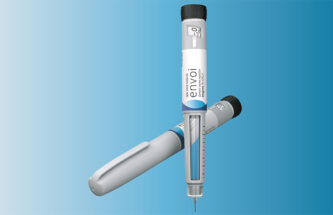
DESIGNING FOR SCALE: RELIABLE MANUFACTURING OF PEN INJECTOR PLATFORMS
Henrik Leisner discusses the reliable scaling of pen injector programmes, considering how high-quality, high-volume manufacture depends on experience and collaboration.
EXPERT VIEW
Chris Hurlstone
INDUSTRIALISING DRUG DELIVERY DEVICES: INSIGHTS FROM 40 YEARS OF GETTING TO MARKET
Chris Hurlstone looks at the process of developing drug delivery systems through the industrialisation phase and explores ways to address the challenges that arise along the way. Drawing on Team’s 40-year track record of supporting drug delivery device innovation, the insights are intended for teams involved in developing drug delivery systems, particularly those responsible for design, engineering, industrialisation and manufacturing transfer.
INDUSTRIALISATION
Andy Wertheim
Quvara Medical
INDUSTRIALISING DRUG DELIVERY IN AN UNCERTAIN WORLD
Andy Wertheim considers how the priorities of drug delivery device industrialisation have shifted in response to the major supply chain shocks of recent years, with companies shifting their focus from purely optimising for low cost and putting much greater emphasis on security and continuity, and what these changing priorities imply for the industry as a whole.
INDUSTRIALISATION
Hong Cui
Ypsomed
FLYING ON TWO WINGS: YPSOMED’S DUAL-ENGINE STRATEGY FOR SUCCESS IN CHINA
Hong Cui, Orfeo Niedermann and Shawn James discuss how Ypsomed has succeeded in China, highlighting the importance of integrating into the local market, keeping in stride with the pace of development and maintaining alignment with global quality standards.
EXPERT VIEW
Jon Powell
DE-RISKING POST-MARKET CHANGE THROUGH PILOT PRODUCTION
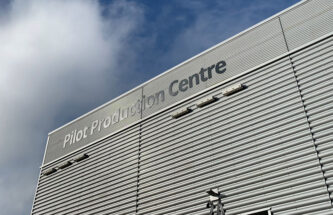
Jon Powell explores how pilot production, delivered through integrated design, development and manufacturing capabilities, can be used to de-risk change in commercial-scale drug delivery devices, highlighting how such approaches can improve confidence in decision-making while reducing overall time and cost.
INDUSTRIALISATION
Erwin van Huijksloot
IGS GeboJagema
HOW MODERN PROTOTYPING ACCELERATES DRUG DELIVERY DEVICE DEVELOPMENT
Erwin van Huijksloot and Joe Melton discuss the importance of early prototyping, ensuring a strong understanding of production efficiency and possible variability is grasped before large-scale manufacture begins.
SHOWCASE
Covestro LLC
Technology Showcase: DIGITAL TWIN TECHNOLOGY FOR AUTOINJECTORS
Covestro outlines how digital twin methodologies, physics-based virtual models spanning structural testing, drop-test simulation and injection-moulding analysis, are helping engineers develop polycarbonate autoinjector components, reducing physical prototyping, tooling iterations and time to market while maintaining safety and reliability.
EXPERT VIEW
Stephan Vogel
EFFICIENCY, DATA INTEGRITY AND QUALITY ASSURANCE IN THE PRODUCTION OF INSULIN PENS
Stephan Vogel discusses the role of advanced monitoring technologies in high-volume medical device manufacturing, considering the key role they play in ensuring quality and compliance with regulatory requirements and how analysing data centrally can support consistency across lines and sites.
1
2
3
…
14
Next
Top