INJECTION
DUAL CHAMBER
FORMULATION
PFS
WEARABLES
ALL INJECTION
OCULAR
ORAL
RESPIRATORY
PULMONARY
NASAL
ALL RESPIRATORY
SKIN
SUSTAINABILITY
MORE
INTERVIEWS
EXPERT VIEWS
EARLY INSIGHTS
COMPANY LISTINGS
OUR AUTHORS
THE MAGAZINE
EVENTS
ED CALENDAR
MEDIA PACK
CONTRIBUTE
Subscribe
INJECTION
DUAL CHAMBER
FORMULATION
PFS
WEARABLES
ALL INJECTION
OCULAR
ORAL
RESPIRATORY
PULMONARY
NASAL
ALL RESPIRATORY
SKIN
SUSTAINABILITY
MORE
INTERVIEWS
EXPERT VIEWS
EARLY INSIGHTS
COMPANY LISTINGS
OUR AUTHORS
THE MAGAZINE
EVENTS
ED CALENDAR
MEDIA PACK
CONTRIBUTE
SEARCH
SEARCH
advanced search
INJECTION
WEARABLES
Dr Haydon DuMond
Enable Injections
THE PERCEPTION PROBLEM WITH SC VOLUME LIMITS AND ITS DRUG DEVELOPMENT COST
Dr Haydon DuMond, Dr Mehul Desai, along with Dr Shirish Ingawale, examine survey evidence and regulatory precedent showing that the widely cited 2–3 mL limit on subcutaneous delivery reflects device history and information habits rather than tissue biology, and consider the consequences for formulation strategy, device selection and the growing pipeline of large-volume subcutaneous therapies.
EXPERT VIEW
Dr Matthew Roberts
DESIGN VERIFICATION FOR THE REAL WORLD: COMPLEX DRUG DELIVERY IN UNCONTROLLED ENVIRONMENTS
Dr Matthew Roberts and Andrew Fiorini explore the key steps involved in building a successful design verification programme for ambulatory electromechanical infusion systems and share the lessons they have learned along the way.
EARLY INSIGHT
David Johnston
Torramics
FROM SPACE PROPULSION TO DRUG DELIVERY: A NEW SUBCUTANEOUS PLATFORM FROM TORRAMICS
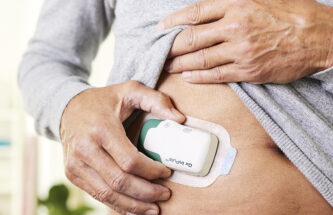
David Johnston introduces the NanoFlow platform, a wearable injector based on semiconductor architecture rather than a traditional mechanical pump, enabling enhanced dosing precision and further miniaturisation than is possible with legacy systems.
EXPERT VIEW
Dr Sammy Hassan
Designing a Wearable Drug Delivery Pump
Dr Sammy Hassan delves into the measures required to ensure safe and reliable use of wearable drug delivery pumps, explaining the difficulties and benefits of incorporating such standards into a device.
INDUSTRIALISATION
Fabio Weingärtner
Herrmann Ultraschall
Ultrasonic Joining Process Ensures Reliable Assembly of Sensitive CGM Components
Fabio Weingärtner discusses the value of ultrasonic welding for wearable diagnostic and drug delivery devices, using a continuous glucose monitor developed by GlucoModicum as a case study, describing the joining challenges for distinct, delicate components and the innovative solutions produced to overcome complex design requirements.
INDUSTRIALISATION
Christy Chen
SHL Advantec
INNOVATION AND AUTOMATION REUNITED – ENABLING SCALABLE FINAL ASSEMBLY FOR CARTRIDGE-BASED AUTOINJECTORS
Using SHL Medical's Reunite™ dual-chamber autoinjector and SHL Advantec's AOU™ assembly machine platform as a case study, Christy Chen and Alberto Flores explore the critical synergy between flexible automation architecture and expert final assembly services.
INDUSTRIALISATION
Diane McCormick
NIPRO PharmaPackaging
LYOPHILISATION VIALS: QUICK AND EFFECTIVE SOLUTIONS TO REDUCE FOGGING
Diane McCormick and Clément Condouret discuss lyophilisation fogging, explaining its negative downstream effects and presenting NIPRO’s thermal treatment, VIALEX™, to minimise this issue.
FORMULATION
Dr Anders Johansson
Nanexa
PHARMASHELL – AN ALD NANOCOATING TECHNOLOGY FOR ONCE-MONTHLY INJECTABLES
Dr Anders Johansson, Dr Polla Rouf and Dr Oliver Hedge introduce Nanexa’s PharmaShell
®
technology and discuss how, in combination with nanotechnology, it can achieve previously unattainable dosing intervals with standard formulations.
INDUSTRIALISATION
Henrik Leisner
Phillips Medisize
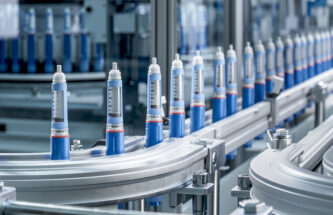
DESIGNING FOR SCALE: RELIABLE MANUFACTURING OF PEN INJECTOR PLATFORMS
Henrik Leisner discusses the reliable scaling of pen injector programmes, considering how high-quality, high-volume manufacture depends on experience and collaboration.
EXPERT VIEW
Chris Hurlstone
INDUSTRIALISING DRUG DELIVERY DEVICES: INSIGHTS FROM 40 YEARS OF GETTING TO MARKET
Chris Hurlstone looks at the process of developing drug delivery systems through the industrialisation phase and explores ways to address the challenges that arise along the way. Drawing on Team’s 40-year track record of supporting drug delivery device innovation, the insights are intended for teams involved in developing drug delivery systems, particularly those responsible for design, engineering, industrialisation and manufacturing transfer.
INDUSTRIALISATION
Andy Wertheim
Quvara Medical
INDUSTRIALISING DRUG DELIVERY IN AN UNCERTAIN WORLD
Andy Wertheim considers how the priorities of drug delivery device industrialisation have shifted in response to the major supply chain shocks of recent years, with companies shifting their focus from purely optimising for low cost and putting much greater emphasis on security and continuity, and what these changing priorities imply for the industry as a whole.
EXPERT VIEW
Jon Powell
DE-RISKING POST-MARKET CHANGE THROUGH PILOT PRODUCTION
Jon Powell explores how pilot production, delivered through integrated design, development and manufacturing capabilities, can be used to de-risk change in commercial-scale drug delivery devices, highlighting how such approaches can improve confidence in decision-making while reducing overall time and cost.
INDUSTRIALISATION
Erwin van Huijksloot
IGS GeboJagema
HOW MODERN PROTOTYPING ACCELERATES DRUG DELIVERY DEVICE DEVELOPMENT
Erwin van Huijksloot and Joe Melton discuss the importance of early prototyping, ensuring a strong understanding of production efficiency and possible variability is grasped before large-scale manufacture begins.
SHOWCASE
Covestro LLC
Technology Showcase: DIGITAL TWIN TECHNOLOGY FOR AUTOINJECTORS
Covestro outlines how digital twin methodologies, physics-based virtual models spanning structural testing, drop-test simulation and injection-moulding analysis, are helping engineers develop polycarbonate autoinjector components, reducing physical prototyping, tooling iterations and time to market while maintaining safety and reliability.
INJECTION
Landon Goldfarb
Instron
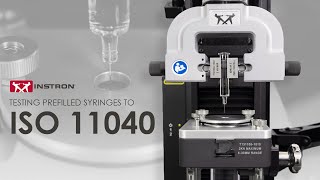
Testing Prefilled Syringes to ISO 11040
Instron's Landon Goldfarb talks through ISO 11040, a testing standard that addresses the design and functional properties of prefilled syringes.
INTERVIEW
Nicholas Heaton
SHL Medical
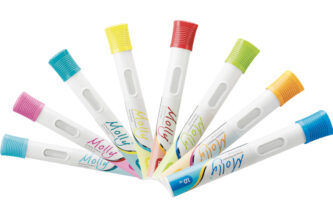
Interview: Celebrating 10 Years of Molly Enabling Patients’ Independence
Nicholas Heaton looks back on the decade since Molly – SHL Medical’s signature two-step autoinjector platform – was launched onto the market, reviewing what made the device platform a success, where Molly is positioned in the market today and how it will continue to evolve to meet the demands of the future.
WEARABLES
Dr Ines Rüstenberg
Gerresheimer
FROM SMALL TO LARGE MOLECULES: ADVANCING PRECISION PUMP TECHNOLOGY FOR BIOLOGIC DRUG DELIVERY
Dr Ines Rüstenberg, Roger Müller and Dr Yannick Schmid, discuss solutions for large-molecule drug delivery, highlighting the applicability of two infusors, Gx InPuls and Gx InPuls Flex, which employ micropump technology to overcome challenges with large-molecule delivery.
INTERVIEW
Andy Wertheim
Quvara Medical
Interview: GLP-1 Demand and the New Reality of Device Manufacturing Capacity
Andy Wertheim discusses the growing shortage of available manufacturing capacity driven by the boom in GLP-1 therapies, why this means mid-volume development programmes across a range of sectors are struggling to move from development to industrialisation, and how Quvara Medical is ideally positioned to provide the capacity that these programmes lack.
INDUSTRIALISATION
Paavo Sillanpää
UPM Adhesive Materials
CLOSING THE SAFETY GAP: WHY PHARMA-DEDICATED LABELS MATTER
Paavo Sillanpää discusses why pharma-dedicated labels matter for more challenging labelling applications as well as how to avoid potential label failure and brand risk.
INJECTION
Martin Høier Thomsen
MGS Mfg Group
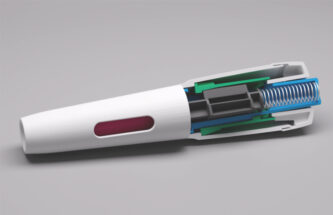
ADVANCING AUTOINJECTOR PLATFORMS FOR EVOLVING DRUG AND PATIENT NEEDS
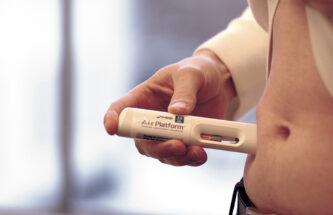
Martin Høier Thomsen introduces MGS’s A.i.r. Platform™ within the broader context of the evolution of autoinjector platforms towards more adaptable, customisable solutions. He considers how next-generation autoinjector platforms can address increasingly complex and changing demands, while helping to mitigate risk and prioritise usability.
INJECTION
Cecile Gross
Nemera
IMPORTANCE OF BEING PATIENT-CENTRIC IN CARDIOVASCULAR-KIDNEY-METABOLIC CARE
Cécile Gross and Mark Tunkel discuss Nemera's substantial portfolio of user-friendly, effective injectable devices available to meet the needs of patients with diverse chronic conditions.
INJECTION
Manuela Giacon
Stevanato Group
DEORA™: FILLING THE GAP FOR MULTI-USE, FIXED-DOSE INJECTION SOLUTIONS
Manuela Giacon explores the evolution of handheld drug delivery devices, leading up to today’s challenges, and presents the company’s latest addition to its drug delivery portfolio.
WEARABLES
Tony Bedford
Phillips Medisize
LVSC DELIVERY: HOW VOLUME AND CONCENTRATION REQUIREMENTS ARE RESHAPING DEVICE SELECTION
Tony Bedford considers how the rise in biologic formulations together with a strong shift towards subcutaneous administration is shaping the drug delivery industry, particularly in relation to large-volume subcutaneous delivery.
INJECTION
Girum Yemane-Tekeste
Kindeva
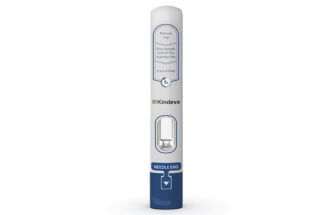
AUTOINJECTOR TECHNOLOGY FOR AUTOMATIC MICROPARTICLE SUSPENSION AND INJECTION
Girum Yemane-Tekeste and Stephen Leslie share how Kindeva is building on its experience and history of innovation to develop an enabling technology for injectable microparticles and then evaluating it through proof-of-principle testing.
Prev
1
2
3
4
5
…
46
Next
Top